
Our Story
Operating an Airbnb (below), we noticed that our pillows were frequently displaced upon our return. Inquiring with our cleaner, she informed us that the intense winds in Joshua Tree compelled her to store the pillows in a chest, as she often found them scattered across the property. Due to time constraints, she was unable to launder the covers and reposition the pillows. We decided to purchase pillow weights to resolve the issue, yet a thorough search online yielded no results.

We thought, "Why not try corn bags?" They not only altered the shape and balance of our pillows, but coyotes eventually discovered them. We experimented with sandbags, zip locks filled with sand, and even sewing straps into the pillowcases, but we disliked how it restricted the pillows' movement. That approach was not for us. After trying numerous solutions from forums, we put the issue aside and tolerated lumpy pillows for another year. We couldn't find a satisfactory solution that preserved the feel and design of our chosen pillows. A year later, during the COVID-19 lockdown, we decided to buy a sewing machine and revisit this project. After several months of ruining pillowcases (and possibly a washing machine), we discovered the perfect blend of materials that worked with even the most porous pillowcases, which involved using up all the sample transfer tapes from 3M and Avery Dennison.
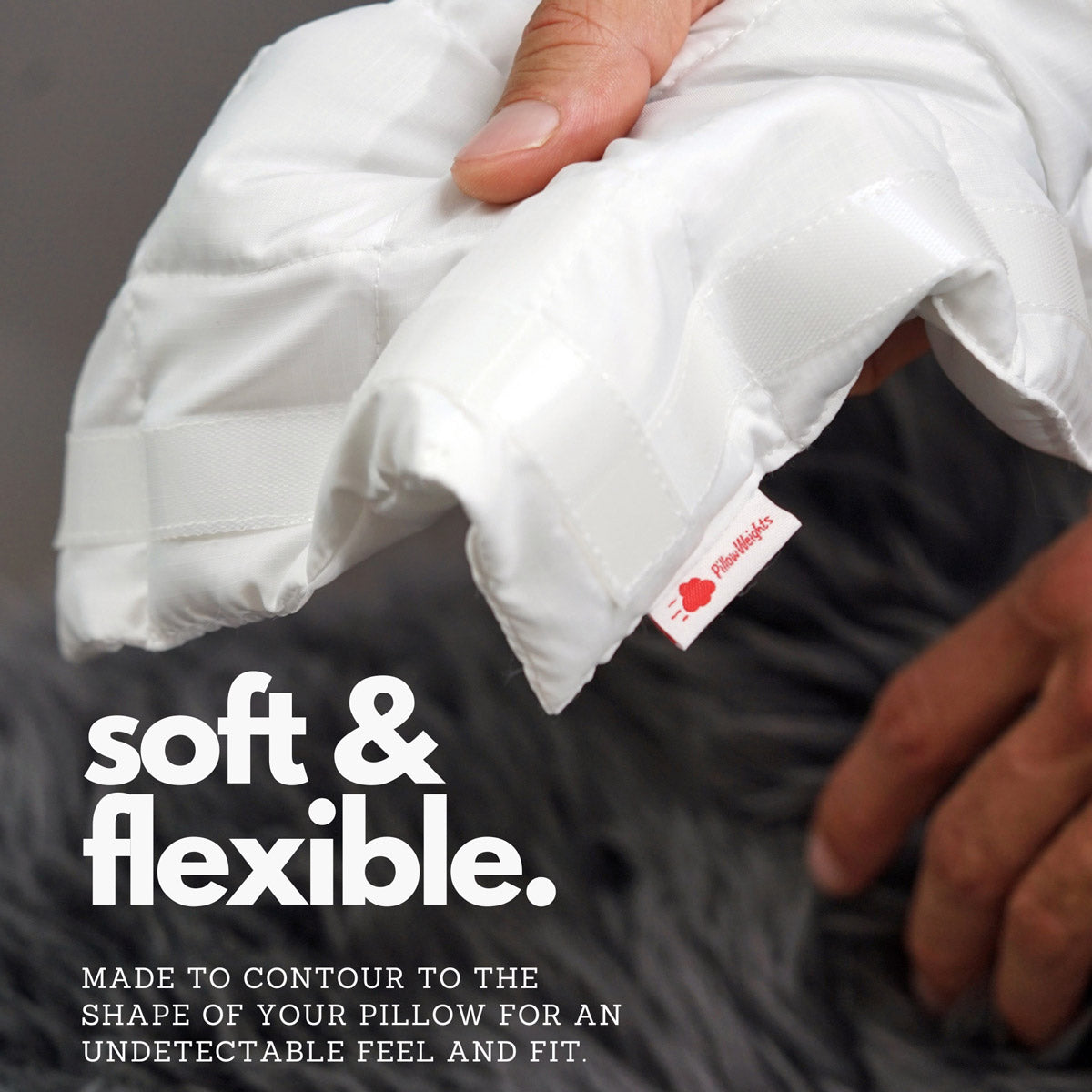
Our challenge was to find an adhesive that could bond with the canvas material of our pillowcases, withstand the elements and the washing machine, yet be gentle enough not to alter the pillows' appearance and texture. We managed to create a soft, mini weighted blanket thin enough not to affect the pillow's shape. The straightforward part was making it soft and slim; the difficulty lay in attaching it to the pillow without upsetting its balance, feel, and aesthetics. We intended to use a soft hook and loop fastener for easy detachment, but finding an adhesive that met all our criteria without being obtrusive proved challenging. At 3M and Avery, we had team members join our mission, sharing our excitement and anticipation for the sample results.
Our breakthrough came with an adhesive typically sold in bulk for transportation and automotive purposes and with a little help from Walker Tape Converting in Utah, we created a unique fastening system that exceeded all expectations.
Over time, cheaper alternatives began appearing online, including rigid metal plate products and low-cost imitations attempting to replicate the concept. Some focused purely on adding weight while ignoring the difficult engineering challenges that made the original product work properly in the first place. Others introduced harder, more rigid designs that could alter the feel of the pillow, create pressure points, or increase wear on fabrics over time.

Over time, cheaper alternatives began appearing online, including rigid metal plate products and low-cost imitations attempting to replicate the concept. Some focused purely on adding weight while ignoring the difficult engineering challenges that made the original product work properly in the first place. Others introduced harder, more rigid designs that could alter the feel of the pillow, create pressure points, or increase wear on fabrics over time.
What started as one person trying to solve an annoying real-world problem quickly spread to homeowners, designers, rooftop spaces, hotels, resorts, and yacht owners looking for a cleaner way to keep outdoor pillows in place without sacrificing the beauty of their space.